

Table of Contents
The United States has successfully executed a digital intervention of historic proportions. Neutralizing the TikTok platform within its borders was not a sudden decision but the culmination of a multi-year, multi-administration campaign fueled by a potent mix of national security fears, economic competition, and political alarm. The goal was unambiguous: to sever the operational control of the wildly popular short-form video app, used by over 170 million Americans, from its Chinese parent company, ByteDance.
This wasn’t just another antitrust case. It was a digital-age cold war maneuver, resulting in a forced corporate restructuring that handed an 80% stake of “TikTok America” to a U.S.-led consortium including Oracle, Walmart, and investment firms. This strategic move deliberately reduced ByteDance’s share to a non-controlling minority, a structure designed to comply with U.S. law and, more importantly, to extinguish Beijing’s potential influence. This article deconstructs the U.S. government’s five-point master plan to subdue TikTok, analyzing the deep-seated fears over data espionage, algorithmic manipulation, and the app’s undeniable power to reshape American public opinion on the world’s most contentious issues.
The Genesis of a Digital Standoff
The confrontation with TikTok has been simmering for years, transcending the partisan divide. The journey to this moment began under the Trump administration and found bipartisan support, culminating in the decisive action we see today.
The Executive Order That Started It All
In August 2020, President Donald Trump signed an executive order that set the stage. He framed TikTok as a national emergency, citing the risk that the Chinese government could access the personal data of American users. While the legal battle that followed delayed immediate action, it established a powerful political precedent. The Biden administration, despite initial hesitation, ultimately inherited and advanced this policy, recognizing the same fundamental threats.
The “win-win” deal that eventually emerged was a political necessity. It averted an outright ban—a legally fraught and unpopular move—while achieving the primary objective: placing TikTok’s U.S. operations firmly under American corporate and governmental oversight.
The 5-Point Blueprint for Neutralizing the TikTok Platform
The U.S. government’s strategy was not monolithic but a multi-pronged attack targeting the app’s most vulnerable points: its ownership, its data, its algorithm, and its political influence.
1. The Data Sovereignty Argument: A “Trojan Horse” in American Pockets
The most frequently cited justification was national security. U.S. intelligence agencies and lawmakers argued that under China’s 2017 National Intelligence Law, companies like ByteDance can be compelled to “support, assist, and cooperate with the state intelligence work.”
- The Fear: The Chinese Communist Party could force ByteDance to hand over the data of American users. This isn’t just about browsing history; it’s a treasure trove of:
- Location data tracking daily movements and habits.
- Device information that can identify a user’s network.
- Private messages and creative content.
- Biometric data potentially gleaned from user-uploaded videos.
This data, in the wrong hands, could be used to blackmail individuals, profile government employees, or conduct sophisticated espionage. A report from the University of Toronto’s Citizen Lab has previously highlighted potential vulnerabilities in how data could be accessed, fueling these concerns.
2. The Algorithmic Advantage: TikTok’s Unfair Cognitive Weapon
Beyond data theft, the U.S. was deeply troubled by TikTok’s secret weapon: its terrifyingly effective recommendation algorithm. While American apps like Facebook and Instagram struggled to keep user attention, TikTok’s “For You Page” (FYP) became a dopamine-dispensing machine of unparalleled efficiency.
- How it Works: The algorithm isn’t based on your social network. It’s a pure engagement engine that builds a detailed psychological profile based on:
- Watch time and re-watches.
- Likes, shares, and comments.
- Even subtle behaviors like skipping a video.
- The Threat: U.S. officials feared this algorithm could be weaponized. It could be subtly manipulated to:
- Promote pro-China propaganda and suppress content critical of the CCP.
- Swing political opinions by flooding certain demographics with specific content.
- Create social division by amplifying inflammatory or misleading videos.
As noted in a Bloomberg “Tech In Depth” bulletin, TikTok’s algorithm creates a massive content flow, understanding user interests and then flooding them with similar material, creating powerful informational echo chambers.
3. The Political Awakening: How TikTok Broke the American Media Monopoly
Perhaps the most immediate catalyst for action was TikTok’s proven ability to dramatically shift American public opinion, particularly among the youth. The platform evolved from a dance-and-lip-sync app into a primary news source for Gen Z, with consequences that alarmed the Washington establishment.
The Case of the Israel-Gaza War
The war became a pivotal moment that demonstrated TikTok’s raw political power. While traditional U.S. media and legacy social platforms were perceived by many young users as having a pro-Israel bias, TikTok became a raw, uncensored window into the humanitarian crisis in Gaza.
The data is staggering. A Pew Research Center survey found that 48% of U.S. TikTok users aged 18-29 use the app as a primary source for political news. This shift in information consumption had a tangible impact:
- A Harvard-Harris poll showed 60% of Americans aged 18-24 sympathized more with Hamas than Israel in the conflict’s early stages.
- The same poll revealed that 71% of young Americans disapproved of Israel’s policies.
- Critically, 51% of young Americans believed Israel “should not exist as a Jewish state,” a seismic shift in publicly expressed opinion.
TikTok didn’t just report the news; it framed it. The platform’s algorithm, seemingly agnostic to traditional media narratives, served up visceral, user-generated content from Gaza that bypassed official channels and created a massive, youth-driven protest movement that U.S. politicians could not ignore.
4. The Economic Competition: Protecting American Tech Supremacy
Let’s be frank: the U.S. tech lobby wanted TikTok gone. Meta (Facebook/Instagram), Snapchat, and Google (YouTube) were losing the attention war. Despite having vastly more resources, they couldn’t replicate the addictive, content-discovery magic of the “For You Page.”
- Usage Dominance: According to eMarketer, TikTok consistently led in average watch time per user, clocking in at 52 minutes daily compared to Instagram’s 35 and Facebook’s 30.
- A Non-Level Playing Field: U.S. companies argued they were competing not just with a company, but with a nation-state. They alleged ByteDance benefited from Chinese government support and didn’t have to play by the same data privacy rules.
Neutralizing TikTok‘s competitive threat was an undeniable, if less publicly stated, motive.
5. The Geopolitical Symbolism: A Proxy Battle for Digital Dominance
Finally, the TikTok struggle is a microcosm of the larger technological cold war between the U.S. and China. From Huawei’s 5G equipment to semiconductor exports, the U.S. has moved systematically to decouple its critical digital infrastructure from Chinese control.
TikTok, as the most visible and culturally impactful Chinese tech export, was the ultimate prize. Forcing its sale was a powerful signal to Beijing and the world: the United States would not cede control of its digital public square to a strategic adversary.
The Winners and Losers of the Great TikTok Takeover
The forced sale created clear geopolitical victors.
- The U.S. Government: Achieved its primary goal of severing ByteDance’s control, a template it may use against other Chinese apps.
- Oracle & Walmart: Gained a vital stake in one of the world’s most valuable social media platforms and access to its coveted user data and technology.
- U.S. Competitors (Meta, etc.): Saw their most formidable competitor structurally weakened and its operations potentially hampered.
Perhaps the most telling reaction came from Israeli Prime Minister Benjamin Netanyahu, who, according to reports, celebrated the deal privately with American influencers. He reportedly hailed it as “the most important purchase happening right now,” recognizing that a U.S.-controlled TikTok would be less likely to host content perceived as hostile to Israeli government policy.
FAQs: The TikTok Neutralization Explained
Q: Do American users need to download a new app now?
A: No. The transition is happening behind the scenes on the corporate ownership level. The TikTok app itself will remain the same for end-users, but its data governance and corporate oversight are now U.S.-based.
Q: Could this set a precedent for the U.S. government targeting other apps?
A: Absolutely. The successful campaign against TikTok creates a legal and political blueprint for taking action against other foreign-owned apps deemed a national security risk, particularly those from China and other adversarial nations.
Q: Was this just a Trump-era policy, or is it bipartisan?
A: This is a critically important point. While Trump initiated the confrontation, the concern over TikTok is overwhelmingly bipartisan. The legislative push for divestment received sweeping support from both Democrats and Republicans, revealing a rare consensus in Washington on the China tech threat.
Q: How does this affect content on the platform?
A: This is the billion-dollar question. In the short term, little may change. Long-term, with U.S. corporate ownership and likely increased pressure from U.S. lawmakers, the algorithm’s content recommendations could be subtly altered to avoid promoting views seen as antithetical to U.S. foreign policy or national interests.
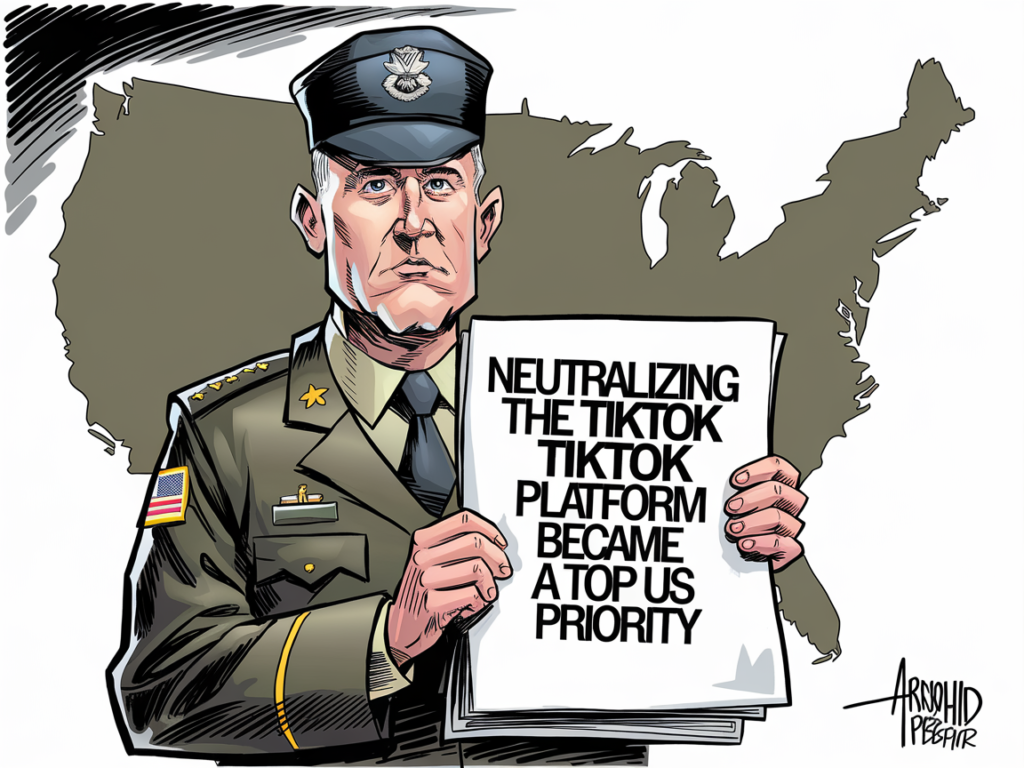
The campaign focused on neutralizing the TikTok platform, marking a watershed moment in internet history. It demonstrates that in the 21st century, digital platforms are not just tools for connection and entertainment but are critical infrastructure and potent weapons of geopolitical influence. The United States has drawn a line in the sand, declaring that the flow of data and information within its borders is a matter of national security, not just free-market commerce. The repercussions of this digital decoupling will echo for years to come.
Source: Wiz Techno + websites


