
Airport Hacking: Hidden Weakness That Could Paralyze Global Travel
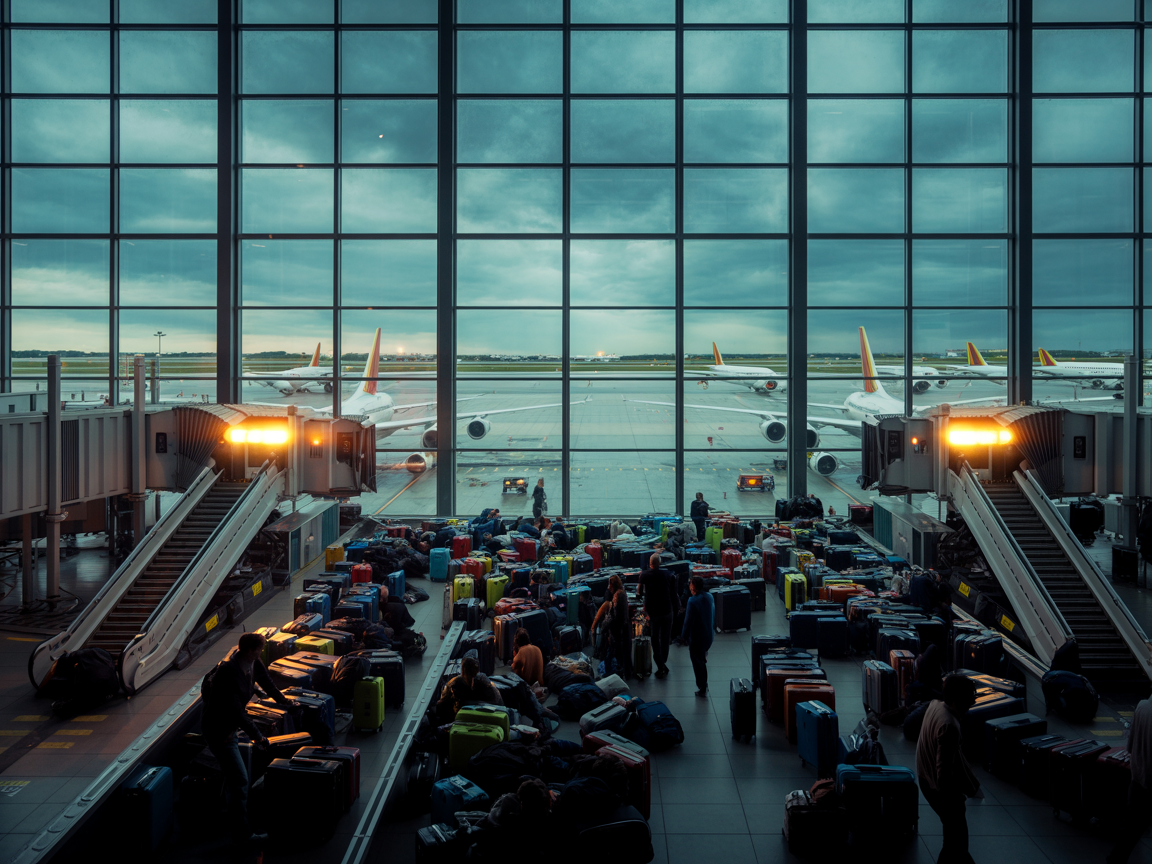
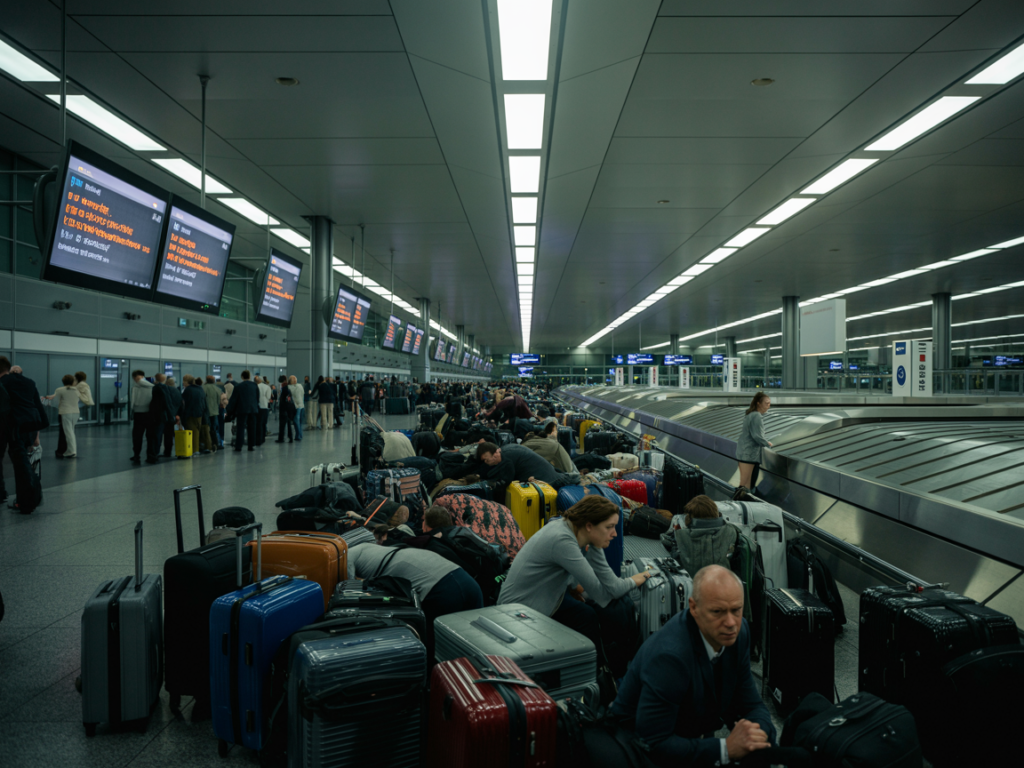
It was supposed to be a normal Saturday morning for passengers in Europe’s busiest airports. Travelers at Brussels, Berlin, and London Heathrow were getting ready to board their flights. But instead of smooth check-ins, they faced long delays, cancellations, and hours of uncertainty.
The reason? A cyberattack that didn’t even target the airports directly. Instead, hackers went after a third-party service provider responsible for passenger check-in systems and boarding software. In a single strike, thousands of flights were disrupted and travelers stranded.
This incident revealed one uncomfortable truth: Airport Hacking is no longer a theory—it’s a global threat.
The Supply Chain Factor
Modern airports are digital ecosystems. They depend on multiple partners for software, booking systems, communications, security checks, and flight operations. That’s why hackers no longer need to break into an airport’s central system. Instead, they look for weak links—third-party vendors with access to multiple clients.
This technique is called a supply chain attack, and it’s one of the most dangerous trends in cybersecurity. Rather than forcing their way into every airport’s network individually, hackers just compromise the provider that serves them all.
That’s exactly what happened during the recent airport disruptions in Europe. It echoes earlier high-profile cases such as the SolarWinds hack in 2020, which allowed attackers to infiltrate U.S. government agencies and Fortune 500 companies through a corrupted software update.
When hackers hit one supplier, the domino effect can cripple dozens of organizations at once.
How Airport Hacking Works
Cybersecurity analysts outline four key methods used in supply chain hacks that apply directly to airports:
- Exploiting software vulnerabilities
Hackers insert malicious code into software updates. When airports download these updates, the malware spreads silently. That’s exactly how SolarWinds unfolded. - Compromising trusted tools
Sometimes, attackers alter entire applications before they’re distributed. Airports unknowingly install software that’s already been tampered with, turning a trusted tool into a Trojan horse. - Social engineering
Human error remains the easiest entry point. Hackers send fake emails, attachments, or login pages that trick employees into sharing passwords or clicking harmful links. One wrong click can open the door to critical airport systems. - Scaling the damage
Once attackers compromise one vendor, they gain indirect access to hundreds of connected clients. A single weak point can create chaos across multiple airports.
To put it simply: hackers don’t need to break into every “apartment” one by one. They just target the security guard with the master keys.
Why Airport Hacking Is So Dangerous
The threat goes beyond canceled flights and angry passengers. Airports are critical infrastructure, just like power grids or hospitals. Disrupting them can trigger:
- Economic losses: Flight cancellations can cost airlines millions per day.
- Tourism impacts: Entire countries may lose revenue if airports remain paralyzed.
- National security risks: A targeted attack during peak travel could cripple military logistics or emergency response.
- Erosion of public trust: Passengers who experience repeated cyber-related disruptions may lose confidence in air travel.
The European airport incident is just one example. Experts warn that a similar attack in the U.S.—especially during Thanksgiving or Christmas travel—could create chaos across the entire nation.
Lessons for the Aviation Industry
What happened in Europe is a wake-up call for airports everywhere. Protecting only internal systems is no longer enough. Stronger rules must be applied to every supplier, vendor, and partner in the digital ecosystem.
Cybersecurity experts recommend:
- Regular security audits for all technology providers.
- Advanced monitoring tools to detect unusual network activity.
- Diversifying service providers to avoid dependence on a single vendor.
- Crisis simulations that prepare airports to operate manually if systems go offline.
In the U.S., the Cybersecurity and Infrastructure Security Agency (CISA) has already issued guidelines urging airports and airlines to strengthen defenses against supply chain threats.
Protecting Airports and Passengers
Airport Hacking won’t disappear. But the impact can be reduced with layered defenses. Key strategies include:
- Zero Trust Security Models: Every device, user, and vendor is continuously verified before gaining access.
- Multi-Factor Authentication (MFA): Using tools like hardware security keys (e.g., YubiKey 5 NFC) makes it far harder for hackers to hijack accounts.
- Encrypted VPN Connections: Reliable enterprise-grade VPNs ensure that remote communications between airports and vendors remain secure.
- Endpoint Detection and Response (EDR): Advanced software that spots malicious activity before it spreads.
- Back-up and redundancy systems: Keeping manual options available to avoid complete shutdowns.
For individual airport employees and contractors, cybersecurity awareness is just as critical. Many successful hacks still begin with one careless click on a phishing email.
Real-World Impact: A Traveler’s Perspective
Imagine this scenario: You’re flying from New York to Paris. The plane is ready, but at JFK Airport, the check-in counters suddenly stop working. Boarding passes can’t be printed. The system freezes. Within minutes, lines grow longer, flights are delayed, and passengers panic.
The issue isn’t in New York at all—it’s a service provider in another country that was hacked. But the ripple effect traps you and thousands of others.
This is why Airport Hacking isn’t just a technical issue—it’s a human one.
Why the U.S. Must Prepare
The U.S. aviation system is the largest in the world. According to the FAA, over 45,000 flights take off daily across the country. That massive scale also makes it highly vulnerable.
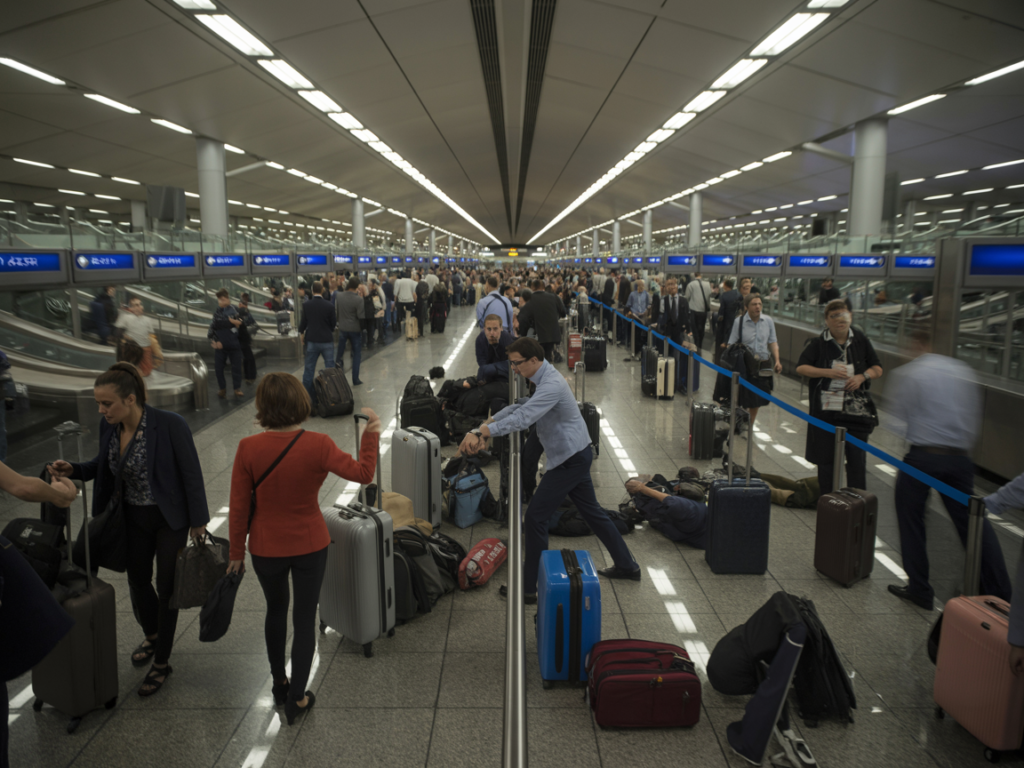
If a supply chain hack were to strike a U.S. vendor used by multiple airlines, the resulting chaos could be unprecedented. Unlike Europe’s incident, which was limited to a few airports, a U.S. attack could ground planes nationwide.
That’s why agencies like CISA and Homeland Security have been warning about cyber threats at airports. It’s not just about IT security anymore—it’s about national resilience.
What Needs to Change
Experts argue that cybersecurity in aviation must evolve in three areas:
- Policy and Regulation
Governments should enforce stricter rules on third-party vendors that serve airports. Security standards must be audited and certified. - Investment in Technology
Airports must upgrade outdated IT systems and adopt AI-driven monitoring tools. Legacy software is often the easiest target. - Cultural Shift
Employees need constant training. Cybersecurity isn’t just the IT department’s job—it’s every staff member’s responsibility.
Airport Hacking and the Bigger Picture
What we saw in Europe is part of a larger trend. Hackers are increasingly targeting critical infrastructure:
- In 2021, the Colonial Pipeline attack disrupted fuel supply across the U.S.
- Hospitals in multiple countries have faced ransomware attacks during the COVID-19 pandemic.
- Public transport systems from San Francisco to Copenhagen have been temporarily shut down.
Airports are simply the next frontier.
Products That Help Strengthen Cybersecurity (Affiliate Suggestions)
For airports, companies, and even individuals who want to reduce their risk exposure, some tools stand out:
🔒 YubiKey 5 NFC – A hardware security key that provides physical two-factor authentication. Find it on Amazon


🌐 Norton 360 Deluxe 2025 – Business VPN solutions to secure corporate communications. Shop on Amazon

🛡 Bitdefender Total Security – Endpoint security software that detects threats in real time. Available on Amazon

These solutions are already used by many companies in the aviation and transport sectors.
Conclusion
The European incident showed that Airport Hacking is not a futuristic scenario—it’s happening now. Hackers don’t need to attack airports directly. By compromising third-party providers, they can bring global travel to a standstill.
For passengers, it may look like a delayed flight. But for governments and airlines, it’s a warning: cybersecurity is no longer optional—it’s a matter of survival.
If airports fail to secure their digital supply chains, the next big attack may not just delay flights. It could paralyze global travel.




This site is my intake, very great style and perfect content.
Thank you so much for your incredibly kind words! It truly means a lot to us that you find both the style and content of the site valuable. 😊
Hi, Neat post. There’s an issue along with your web site in internet explorer, could test thisK IE nonetheless is the market leader and a big section of folks will miss your excellent writing because of this problem.