

The world of technology is constantly evolving, with new innovations emerging daily. However, there are some lost tech inventions that have the potential to revolutionize the way we live and work.

These forgotten inventions, once pioneers in their respective fields, were overlooked but still hold significant promise. By revisiting and refining these ideas, we can unlock new possibilities and shape the future technology trends.
Key Takeaways
- Forgotten inventions can have a significant impact on the tech industry.
- Revisiting lost tech can lead to innovative breakthroughs.
- The potential of these inventions is vast and varied.
- Understanding the past can help shape the future.
- Some lost inventions are being rediscovered and refined.
The Hidden Potential of Overlooked Innovations
Throughout history, numerous innovations have been underappreciated, yet they continue to hold significant potential for modern technological advancements. These underrated innovations often get lost in the annals of time, overshadowed by more prominent discoveries.

The phenomenon of forgotten technologies raises important questions about the factors that contribute to their being overlooked. Several reasons can lead to brilliant ideas falling through the cracks, including lack of funding, inadequate marketing, or simply being ahead of their time.
Why Brilliant Ideas Fall Through the Cracks
Brilliant ideas can fail to gain traction due to various factors. Sometimes, the technology is too advanced for its time, or it lacks the necessary infrastructure to support it. Other times, it may be the result of poor timing or insufficient resources.
The Value of Rediscovering Lost Technologies
Rediscovering lost technologies can lead to breakthrough tech by providing new insights and solutions to current challenges. By revisiting and reevaluating these innovations, we can uncover new applications and improvements that can propel us forward.
1. Babbage’s Analytical Engine: The Victorian Computer
The Analytical Engine, designed by Charles Babbage, represents a pivotal moment in the history of computing, predating modern electronic computers by over a century.
This mechanical marvel was conceived in the 19th century and is considered one of the most significant “lost tech inventions.” Despite its historical importance, the Analytical Engine was largely forgotten, overshadowed by the technological advancements of the 20th century.
How the First Programmable Computer Was Forgotten
The Analytical Engine was a groundbreaking invention that could perform calculations, store data, and execute programs. However, it was never built during Babbage’s lifetime, and its existence was largely forgotten until recent decades.
Applications for Mechanical Computing in the Digital Age
While mechanical computing may seem obsolete, the principles behind the Analytical Engine can inform “future technology trends.” For instance, mechanical systems can offer robustness and low power consumption in specific applications.
| Feature | Analytical Engine | Modern Computers |
|---|---|---|
| Computing Principle | Mechanical | Electronic |
| Programmability | Punch Cards | Software |
As we look to the future, revisiting “lost tech inventions” like the Analytical Engine can provide valuable insights into innovative problem-solving and the evolution of computing.
2. Tesla’s Wireless Power Transmission System
Wireless power transmission, a technology Tesla explored extensively, holds great promise. The idea of transmitting energy wirelessly over long distances was a hallmark of Tesla‘s innovative spirit. He envisioned a world where energy could be transmitted efficiently without the need for wires.

The Abandoned Dream of Global Wireless Energy
Tesla‘s work on wireless power transmission was met with skepticism during his lifetime. Despite his efforts, the technology failed to gain widespread acceptance, and the project was eventually abandoned. However, the concept remained an intriguing possibility, sparking interest among scientists and engineers.
Modern Implementations for Cord-Free Technology
In recent years, wireless power transmission has seen a resurgence. Modern technologies, such as resonant inductive coupling, have made it possible to transfer energy wirelessly with greater efficiency. This has led to the development of various applications, including wireless charging pads and electric vehicle charging systems.
| Technology | Description | Potential Applications |
|---|---|---|
| Resonant Inductive Coupling | A technology that enables efficient wireless energy transfer | Wireless charging pads, electric vehicle charging |
| Radio Frequency (RF) Energy Transfer | A method of transmitting energy wirelessly using radio waves | Powering small devices, IoT applications |
The revival of Tesla’s ideas on wireless power transmission is a testament to the underrated innovations that can lead to breakthrough tech. As research continues, we can expect to see more efficient and practical applications of this technology.
3. Vannevar Bush’s Memex: The Proto-Internet
In the 1940s, Vannevar Bush conceptualized the Memex, a visionary device that laid the groundwork for today’s digital information systems. The Memex was designed to store, organize, and retrieve information efficiently, anticipating many features of modern computers and the internet.
The Information Management System That Predated the Web
The Memex was an electromechanical system that allowed users to store and access vast amounts of information, including text, images, and even audio. It was designed to mimic the human mind’s ability to associate ideas and make connections between different pieces of information. Bush’s vision for the Memex included features such as indexing, annotation, and hyperlinking, which are now fundamental to the way we interact with digital information.
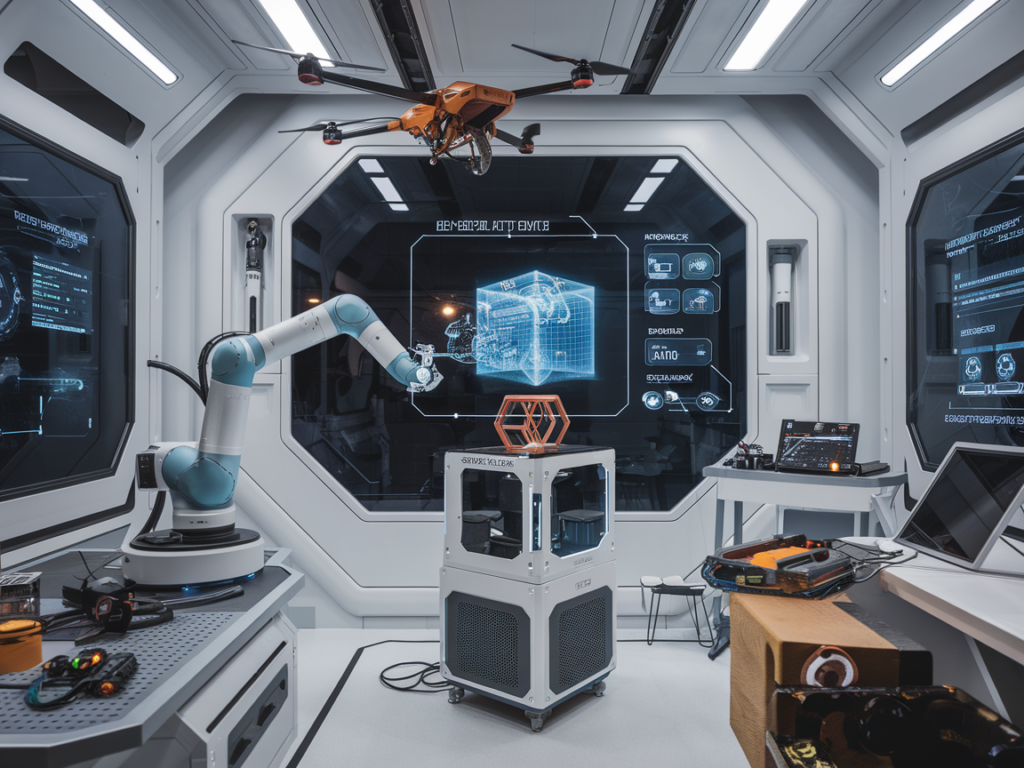
How Memex Concepts Could Transform Digital Knowledge Systems
The concepts embodied in the Memex continue to influence modern digital knowledge systems. Its emphasis on associative linking and user-centric information management has inspired developments in hypertext, the World Wide Web, and modern database systems. By revisiting and refining these concepts, we can unlock new potential for managing and accessing information in the digital age, potentially transforming how we navigate and utilize digital knowledge.
4. The Picturephone: Video Calling Before Its Time
Before Zoom or Skype, there was the Picturephone, an innovative video calling system introduced by Bell Labs in the 1960s. This pioneering technology was one of the first to enable real-time visual communication over distances, laying the groundwork for modern telepresence solutions.
Bell Labs’ 1960s Vision for Visual Communication
Bell Labs developed the Picturephone as part of their exploration into new telecommunications technologies. The device allowed users to see each other while speaking, a concept that was revolutionary at the time. The Picturephone was showcased at the 1964 World’s Fair in New York, demonstrating its potential for enhancing remote communication.
Lessons for Modern Telepresence Technology
The Picturephone’s development and deployment offer valuable insights into the challenges and opportunities of telepresence technology. One key lesson is the importance of integrating high-quality video with audio to create a seamless communication experience. Modern telepresence systems have built upon these early innovations, incorporating advancements in digital technology to improve video quality, reduce latency, and increase accessibility.
Today, the legacy of the Picturephone can be seen in the widespread use of video conferencing tools. As telepresence technology continues to evolve, understanding the historical context and early innovations like the Picturephone can inform the development of future breakthrough tech in visual communication.
5. The Antikythera Mechanism: Ancient Computational Thinking
Among the most significant archaeological finds of the 20th century, the Antikythera Mechanism represents a milestone in the history of computational thinking. This ancient Greek device, discovered in a shipwreck off the island of Antikythera, has fascinated historians and technologists with its complexity and sophistication.
The 2,000-Year-Old Analog Computer
The Antikythera Mechanism is considered one of the earliest known analog computers, designed to calculate astronomical positions, predict eclipses, and track the timing of the Olympic Games. Its intricate system of gears demonstrates a high level of mechanical engineering and understanding of astronomical phenomena.
Applying Ancient Engineering Principles to Modern Challenges
As we continue pushing modern technology’s boundaries, studying ancient innovations like the Antikythera Mechanism can provide valuable insights. For instance, its mechanical precision and ability to model complex systems can inspire new approaches to future technology trends. By understanding how ancient civilizations solved complex problems, we can uncover lost tech inventions that may have relevance today.
“The Antikythera Mechanism is a testament to the ingenuity of our ancestors and a reminder that innovation is not a new phenomenon, but rather a continuum that spans centuries.”
6. Future Technology Trends: Rediscovering and Reimagining Lost Innovations

Rediscovering lost innovations can provide crucial insights into overcoming current technological limitations. By examining historical inventions that were once overlooked, we can uncover new paths forward for modern technology.
Addressing Current Technological Limitations
Forgotten inventions often addressed specific challenges that are still relevant today. For instance, underrated innovations in mechanical computing, like Babbage’s Analytical Engine, can inform modern advancements in digital computing. By understanding the principles behind these historical machines, researchers can identify novel approaches to current technological hurdles.
The Convergence of Historical Ideas with Cutting-Edge Research
The fusion of historical concepts with contemporary research can lead to breakthrough tech. For example, Tesla’s ideas on wireless power transmission, though abandoned in the early 20th century, are now being revisited with modern materials and technologies. This convergence can result in innovative solutions that transform industries.

| Historical Innovation | Modern Application | Potential Breakthrough |
|---|---|---|
| Babbage’s Analytical Engine | Advanced Computing Architectures | More Efficient Processing Units |
| Tesla’s Wireless Power | Wireless Charging Technologies | Ubiquitous Wireless Energy Transfer |
| Vannevar Bush’s Memex | Advanced Information Management Systems | Enhanced Data Retrieval and Analysis |
By reimagining these lost innovations, we can unlock new technological advancements and drive future breakthrough tech.
7. The Dynabook: Alan Kay’s Vision of Personal Computing
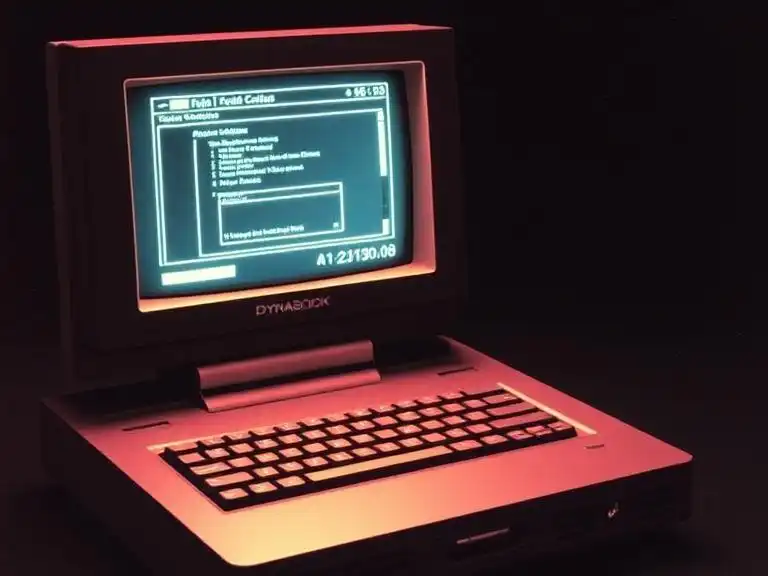
In the 1970s, Alan Kay’s vision for the Dynabook predicted many features of contemporary personal computing technology. This concept was revolutionary for its time, foreseeing the development of portable, interactive computing devices.
The 1970s Concept That Predicted Modern Tablets
The Dynabook was designed to be a personal, portable device that could support various learning and creative activities. It anticipated many features of modern tablets, including a graphical user interface and interactive multimedia capabilities.
Unrealized Aspects That Could Still Transform Computing
While the Dynabook’s vision has influenced modern computing, some of its unrealized aspects, such as advanced educational software and seamless connectivity, could still significantly impact the future of technology. Exploring these concepts further could lead to innovative breakthroughs in personal computing.
Conclusion: Bridging Past Ingenuity with Tomorrow’s Breakthroughs

The forgotten inventions explored in this article represent more than just historical curiosities; they embody the potential for breakthrough tech that can revolutionize our world. By rediscovering and reimagining underrated innovations, we can unlock new solutions to current technological limitations.
From Babbage’s Analytical Engine to Alan Kay’s Dynabook, these pioneering concepts have laid the groundwork for future advancements. As we move forward, it’s essential to bridge the gap between past ingenuity and tomorrow’s breakthroughs, fostering a new era of innovation that builds upon the achievements of the past.
By embracing the potential of underrated innovations, we can accelerate progress in fields like wireless energy transmission, telepresence, and personal computing, ultimately shaping the next tech revolution.
FAQ
What are some examples of lost tech inventions that could shape the next tech revolution?
Examples include Babbage’s Analytical Engine, Tesla’s Wireless Power Transmission System, Vannevar Bush’s Memex, the Picturephone, the Antikythera Mechanism, and the Dynabook, all of which represent breakthrough tech that was ahead of its time.
Why were these innovations forgotten or overlooked?
Many of these innovations were overlooked due to various factors such as lack of funding, technological limitations, or simply being ahead of their time, highlighting the challenges faced by underrated innovations.
How can rediscovering lost technologies impact future tech trends?
Rediscovering lost technologies can lead to new insights and breakthroughs, potentially revolutionizing various fields and shaping the future of technology by leveraging lost tech inventions.
Are there any modern implementations or inspirations drawn from these forgotten inventions?
Yes, many modern technologies have been inspired by or built upon the principles of these forgotten inventions, such as the development of modern computers, wireless charging, and telepresence technology, demonstrating the value of underrated innovations.
Can the study of historical inventions provide valuable lessons for today’s technologists and innovators?
Absolutely, studying historical inventions can provide valuable insights into the challenges and opportunities faced by innovators, as well as the potential for breakthrough tech.
How can we ensure that promising innovations are not overlooked in the future?
By fostering a culture of innovation, providing support for research and development, and encouraging collaboration between historians, technologists, and entrepreneurs, we can help ensure that promising lost tech inventions and underrated innovations are not overlooked.


Hey very nice blog!! Man .. Beautiful .. Superb .. I’ll bookmark your web site and take the feeds additionallyKI am satisfied to search out so many useful information right here in the publish, we’d like develop more strategies in this regard, thank you for sharing. . . . . .
You’re very welcome—I’m really glad the information was helpful! 😊 If there’s anything else you’d like to explore, clarify, or brainstorm, I’m here and ready to dive in with you. Whether it’s something practical, creative, or just plain curious, let’s keep the momentum going!
You have mentioned very interesting points! ps nice site.
Thank you so much! We’re glad you enjoyed the content and the site. We appreciate you taking the time to leave such kind feedback!
Some times its a pain in the ass to read what people wrote but this web site is real user pleasant! .
Some truly select content on this site, saved to bookmarks.
Woah! I’m really digging the template/theme of this website. It’s simple, yet effective. A lot of times it’s tough to get that “perfect balance” between superb usability and visual appeal. I must say you’ve done a excellent job with this. Additionally, the blog loads extremely quick for me on Chrome. Outstanding Blog!